

Band Saw Machine
Band Saw Machine – Industrial Cutting Solution
For Precision Manufacturing
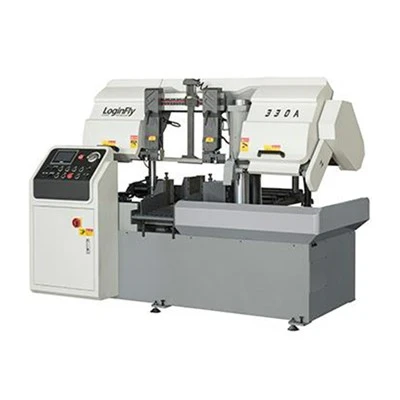
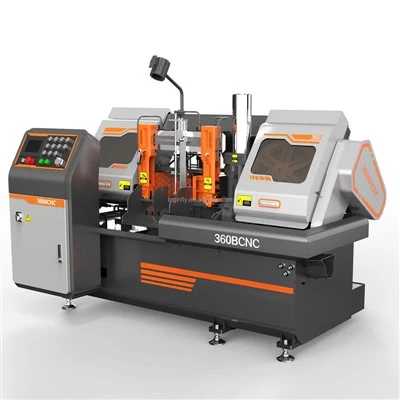
A band saw machine is one of the most essential cutting equipment in modern industrial manufacturing. It is designed with a continuous loop of toothed metal blade that rotates on two or more wheels, enabling precise, stable, and efficient cutting of a wide range of materials including steel, aluminum, stainless steel, alloys, plastics, and even wood.
In today’s competitive industrial environment, manufacturers require cutting solutions that combine accuracy, speed, durability, and cost efficiency. Compared with traditional cutting methods such as circular saws or manual cutting, an industrial band saw machine provides superior advantages in material utilization, cutting consistency, and operational safety.
For B2B buyers in steel fabrication, automotive parts manufacturing, machinery production, construction material processing, and metal service centers, band saw machines are not just tools—they are core production assets that directly influence productivity and profitability.
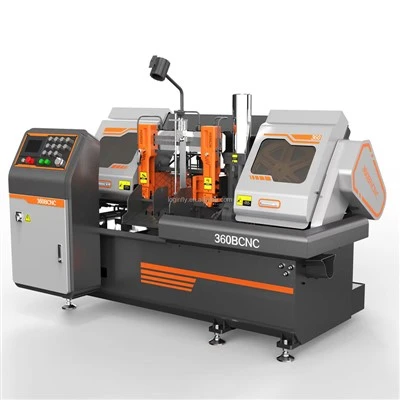
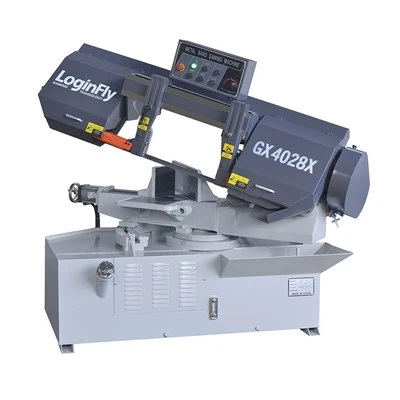
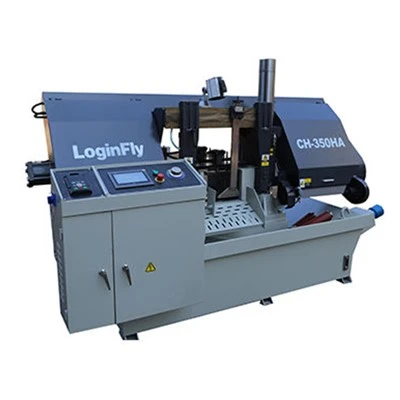
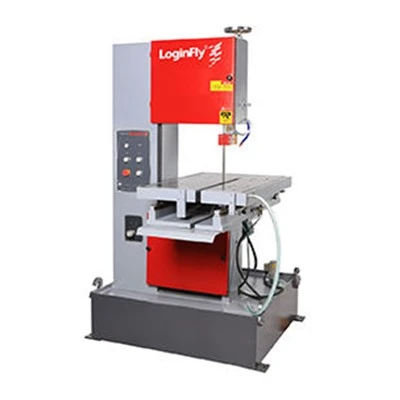
Modern band saw systems are available in multiple configurations such as horizontal band saws, vertical band saws, automatic CNC band saw machines, and semi-automatic metal cutting band saws, each designed for specific industrial workloads and production requirements.



Types of Band Saw Machines
Different industrial applications require different types of band saw machines. Choosing the right model depends on material type, production volume, cutting accuracy requirements, and automation level.

1. Horizontal Band Saw Machine
The horizontal band saw machine is the most widely used type in metal cutting industries. The blade moves in a horizontal direction while the material is fixed in a vice.
Key Features:
· Ideal for cutting metal bars, pipes, and structural steel
· High precision for straight cutting
· Available in manual, semi-automatic, and fully automatic versions
· Suitable for mass production environments
Industrial Advantage: Horizontal band saws are highly efficient for repetitive cutting tasks, making them ideal for steel processing plants and metal fabrication workshops.

2. Vertical Band Saw Machine
A vertical band saw machine features a vertically oriented blade, where the operator manually feeds the material into the cutting area.
Key Features:
· Excellent for curved and irregular cutting
· Suitable for contour cutting and shaping
· High flexibility for custom fabrication work
· Used in tool rooms and prototype manufacturing
Industrial Advantage: Vertical models are preferred when flexibility and design complexity matter more than mass production speed.

3. Automatic Band Saw Machine
An automatic band saw machine is designed for high-volume production environments where consistency and efficiency are critical.
Key Features:
· Automatic material feeding system
· Programmable cutting length
· Hydraulic clamping system
· Continuous unattended operation
Industrial Advantage: Perfect for industries requiring 24/7 production such as automotive manufacturing, aerospace components, and large-scale steel processing.

4. Semi-Automatic Band Saw Machine
A semi-automatic system combines manual control with automated cutting cycles.
Key Features:
· Manual material loading
· Automatic cutting and return cycle
· Balanced cost-performance ratio
· Lower investment than fully automatic systems
Industrial Advantage: Ideal for medium-sized workshops and businesses transitioning toward automation.
Applications of Band Saw Machines
Band saw machines are widely used across multiple industrial sectors due to their versatility, accuracy, and ability to cut a wide range of materials. They are essential in both small-scale workshops and large industrial manufacturing units.
1. Metal Fabrication Industry
Band saw machines are heavily used in metal fabrication workshops for cutting various metal forms such as steel beams, pipes, rods, channels, and plates. They provide high precision cutting with minimal material wastage. These machines are suitable for both straight cuts and contour cutting, making them ideal for preparing raw materials for further processing such as welding, machining, and assembly.
2. Automotive Industry
In the automotive sector, band saw machines are used for manufacturing and shaping different vehicle components. They are commonly applied in cutting engine parts, transmission components, chassis frames, and suspension elements. Their precision helps ensure consistent quality and dimensional accuracy, which is critical for vehicle performance and safety.
3. Construction & Infrastructure
Band saw machines play an important role in construction and infrastructure development projects. They are used to cut structural steel elements required for buildings, bridges, towers, and industrial frameworks. Their ability to handle large and heavy materials makes them essential for preparing steel sections used in large-scale construction projects.
4. Machinery Manufacturing
In machinery manufacturing industries, band saw machines are used to produce a wide range of machine components and industrial equipment parts. They help in cutting raw metal blocks into precise shapes required for gears, housings, brackets, and tool components. This improves production efficiency and ensures high accuracy in final assembly.
5. Aerospace Industry
The aerospace industry requires extremely high precision and material quality. Band saw machines are used to cut lightweight yet strong materials such as aluminum, titanium, and specialized alloys. These materials are used in aircraft structures, engine components, and internal assemblies. The smooth cutting capability of band saws helps maintain material integrity and reduces defects.
6. Oil & Gas Industry
Band saw machines are widely used in the oil and gas sector for cutting heavy-duty materials such as pipelines, drilling equipment parts, and pressure vessels. They are capable of handling thick and hard materials that are commonly used in harsh operating environments. Their durability and cutting strength make them suitable for offshore and onshore applications.
Buying Guide – How to Choose the Right Band Saw Machine
For B2B procurement, selecting the right band saw machine requires careful evaluation of operational needs and long-term production goals.
- 1. Material Type: Different materials require different cutting speeds and blade types: Mild steel: standard speed blades; Stainless steel: low-speed, high-torque machines; Aluminum: high-speed cutting machines.
- 2. Production Volume: Low volume: manual or vertical band saw; Medium volume: semi-automatic horizontal band saw; High volume: fully automatic CNC band saw machine.
- 3. Cutting Capacity: Consider: Maximum cutting diameter; Blade width and thickness; Machine throat depth.
- 4. Automation Level: Automation improves efficiency: Manual: low cost, high labor dependency; Semi-automatic: balanced solution; Fully automatic: best for industrial scaling.
- 5. Blade Quality & Type: Blade selection impacts cutting performance: Bi-metal blades for durability; Carbide-tipped blades for hard materials; Carbon steel blades for general use.
- 6. Machine Stability & Build Quality: Industrial-grade machines should have: Heavy-duty frame construction; Vibration reduction system; Precision guide rails.
- 7. Cooling System: A proper coolant system improves blade life and cutting accuracy, especially for metal cutting operations.
- 8. After-Sales Support: For B2B buyers, supplier support is critical: Spare parts availability; Technical installation support; Maintenance service.
Advantages of Industrial Band Saw Machines
Band saw machines offer several advantages that make them indispensable in modern manufacturing:
1. High Precision Cutting: Ensures consistent and accurate results, reducing material waste.
2. Cost Efficiency: Lower operational cost compared to plasma or laser cutting in many applications.
3. Material Versatility: Can cut a wide range of materials including metals, plastics, and composites.
4. Energy Efficiency: Consumes less power compared to alternative cutting systems.
5. Safety & Automation: Modern systems include safety guards and automated functions, reducing operator risk.
6. Scalability: Suitable for small workshops as well as large-scale industrial production lines.
FAQ – Band Saw Machines
Q1: What materials can a band saw machine cut?
A band saw machine can cut steel, stainless steel, aluminum, copper, plastic, and wood depending on blade type and machine configuration.
Q2: What is the difference between horizontal and vertical band saw machines?
Horizontal machines are used for straight, high-volume cutting of metal bars, while vertical machines are used for curved and detailed cutting.
Q3: Is an automatic band saw machine better for production?
Yes. Automatic band saw machines significantly improve productivity, reduce labor cost, and ensure consistent cutting accuracy in mass production environments.
Q4: How long does a band saw blade last?
Blade life depends on material type, cutting speed, and maintenance. With proper usage, industrial blades can last from several weeks to months.
Q5: Can one machine cut both metal and wood?
Yes, but it requires appropriate blade selection and speed adjustment. However, industrial setups usually dedicate machines for specific materials for efficiency.
Q6: What industries use band saw machines the most?
Key industries include metal fabrication, automotive, aerospace, construction, machinery manufacturing, and steel distribution.
As one of the most professional band saw machine manufacturers and suppliers in China, our products have good reputation in the market. We warmly welcome you to wholesale premium band saw machine from our factory. If you have any enquiry about cooperation, please feel free to email us.
